






Katlax Enterprises Pvt Ltd — Industrial Circular Connectors

    IO Junction Box

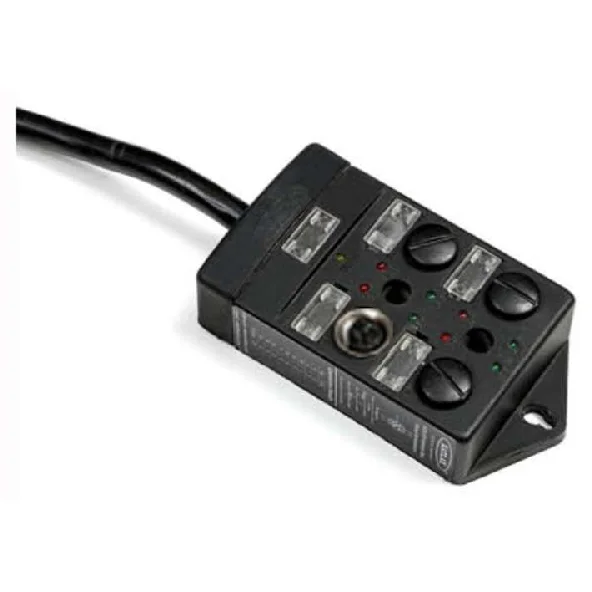
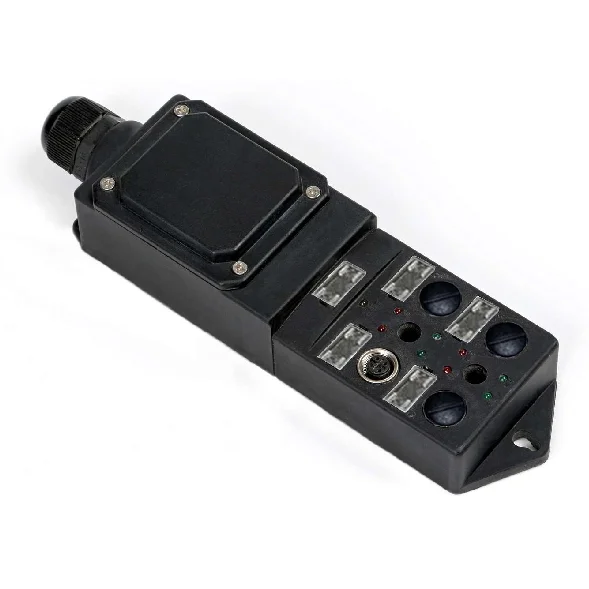
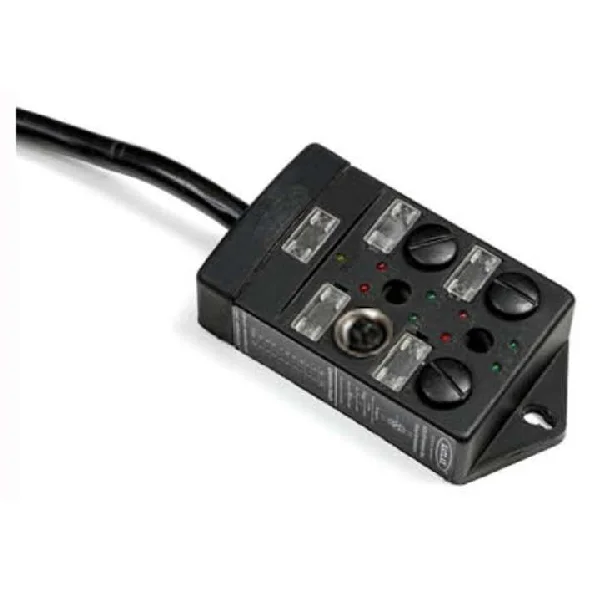
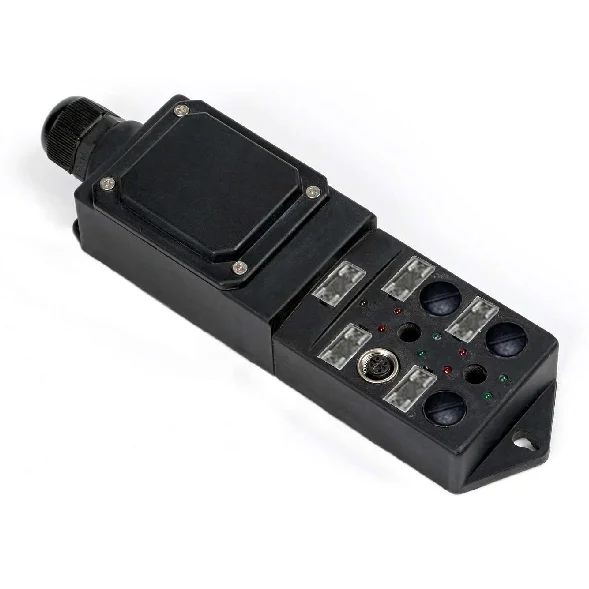
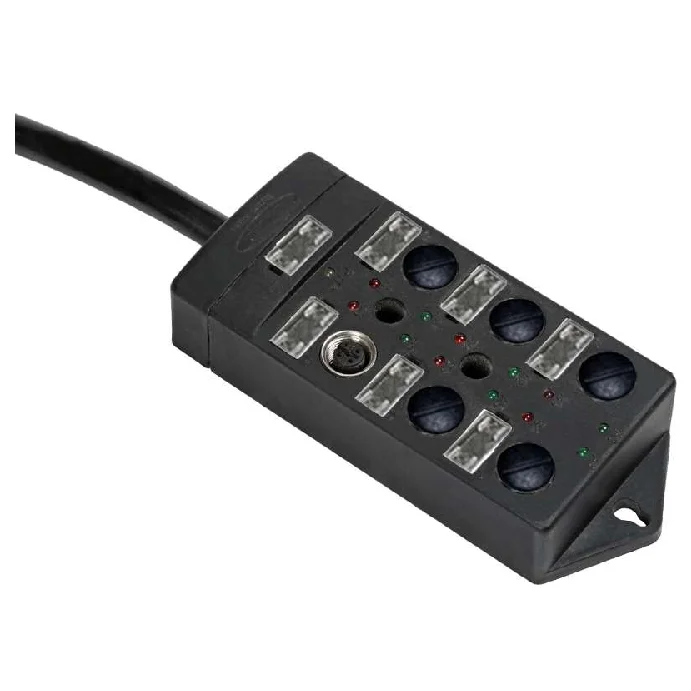
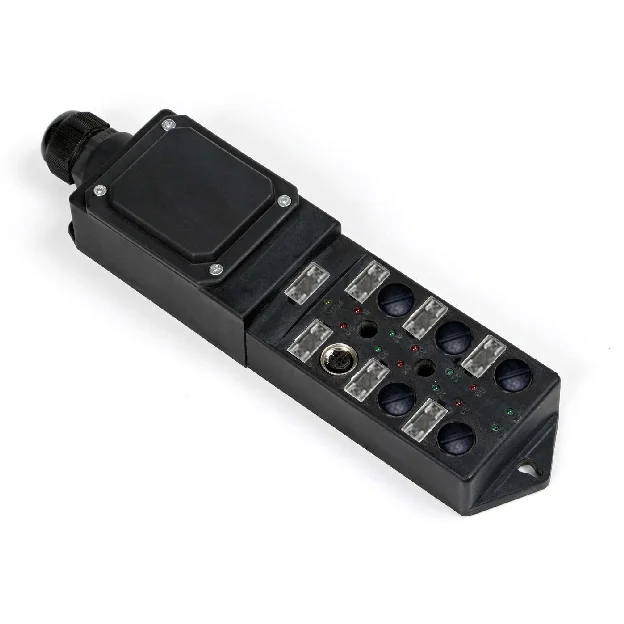
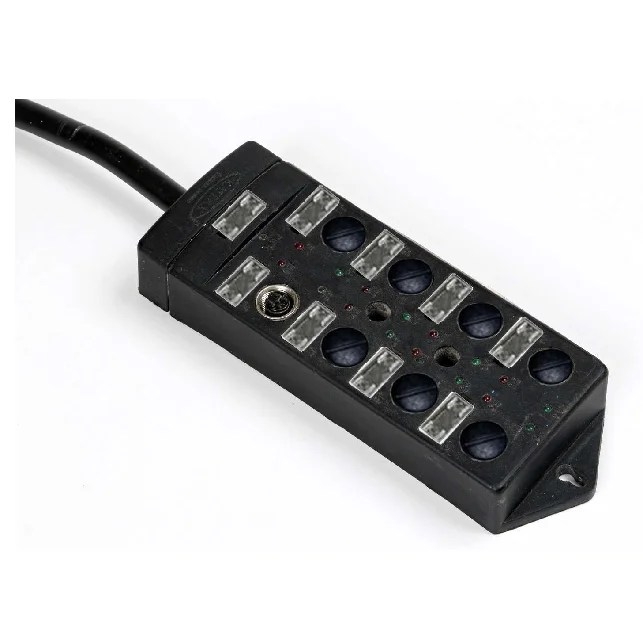
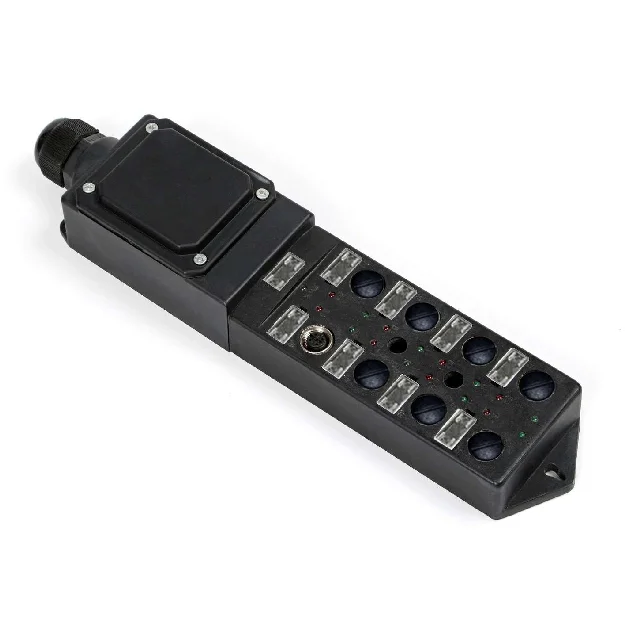
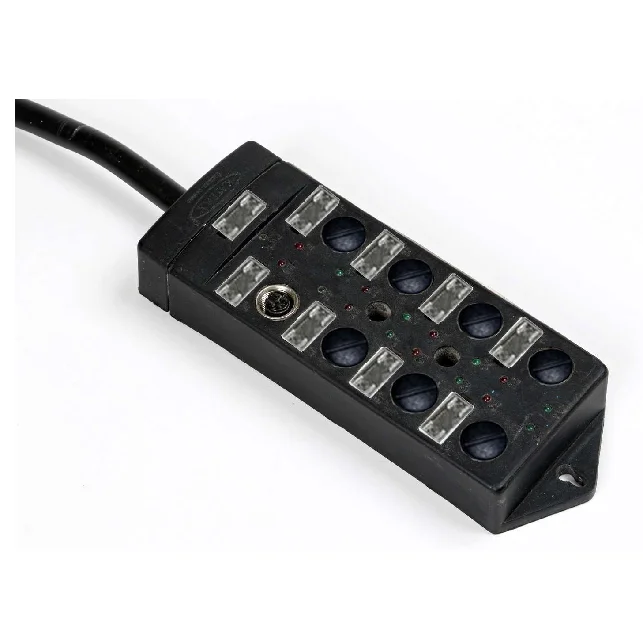
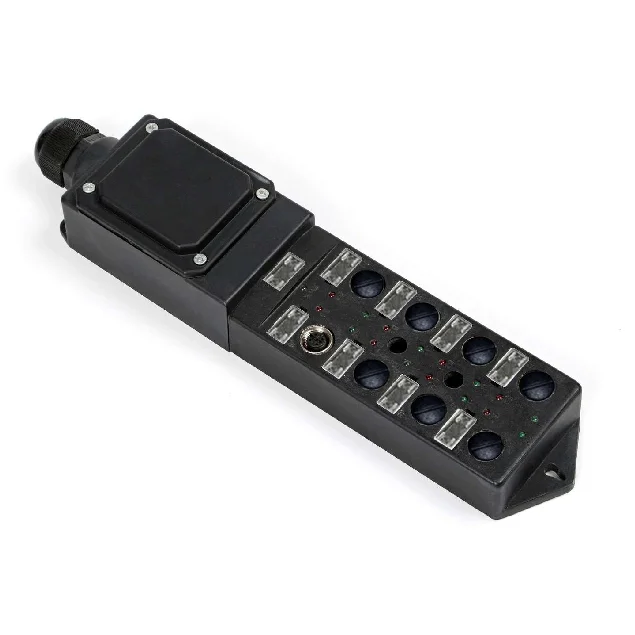
    Industrial IO junction boxes provide essential signal distribution and connection points in automation systems. These compact, robust enclosures house multiple connector terminals for efficient signal routing between sensors, actuators, and control systems. Our junction boxes feature 4-5 pin configurations designed specifically for signal applications, accommodating various automation protocols and industrial communication needs. Built with PVC cable construction for durability and cost-effectiveness, these junction boxes serve as reliable intermediate connection points in complex industrial installations. Essential for system integrators, automation engineers, and facility managers seeking organized, accessible signal distribution solutions.

    All products certified to international standards
    TUV RheinlandCE MarkingUL ListedUKCARoHS CompliantREACH Compliant

    TECHNICAL REFERENCE

    Everything you need to know about IO Junction Box

    Industrial I/O Junction Boxes — Compact Sensor Distribution

    An I/O junction box takes a single multi-conductor trunk cable from a PLC or fieldbus master and breaks it out into multiple individually-connectorised drops for sensors, actuators, and valves. Where you'd otherwise pull half a dozen separate sensor cables back to the control panel, a single junction box mounted on the machine frame turns one trunk run into 4, 6, 8, or 12 short M8 or M12 drops — cleaner cable management, fewer panel penetrations, and far less labour during machine assembly.

    Katlax manufactures industrial I/O junction boxes at our Gandhinagar facility — passive splitter boxes for sensor distribution, active boxes with LED status indicators, and IO-Link-compatible variants for digital sensor networks. All boxes are IP67 rated, suitable for direct mounting in factory environments.

    I/O Junction Box Types

    Type Typical configuration Use case
    Passive M8 splitter 4–8 M8 ports + 1 M12 trunk Compact sensor branching for proximity / photoelectric arrays
    Passive M12 splitter 4–8 M12 ports + 1 M23 / fieldbus trunk Standard sensor / actuator distribution on machine frames
    Active distribution box 4–8 ports + power injection + status LEDs Sensor banks where individual per-port power indication is helpful for diagnostics
    IO-Link master box 4–8 IO-Link M12 ports + fieldbus uplink Digital sensor networks with IO-Link slave devices (smart sensors, RFID readers)

    Technical Specifications

    • IP rating: IP67 standard; IP69K available for washdown / hygienic applications.
    • Operating temperature: −25 °C to +85 °C standard.
    • Housing material: Glass-fibre reinforced polyamide standard; aluminium and stainless steel options for hygienic and washdown environments.
    • Mounting: Through-hole panel mount or rail-mount adapter — direct frame mounting on most machines.
    • Port options: M8 A-coded, M12 A-coded (sensor), M12 D-coded (industrial Ethernet), M12 B-coded (fieldbus).
    • Status LEDs (active variants): Per-port power / signal indication; troubleshooting accelerator for maintenance teams.

    How to Select an I/O Junction Box

    1. Sensor count? 4-port for small branches, 8-port for sensor arrays, 12-port for dense conveyor / packaging applications.
    2. Port type? M8 for compact / space-constrained sensor connections. M12 for the standard sensor / actuator mix.
    3. Trunk interface? M12 A-coded for sensor signal trunks; M12 B/D-coded for fieldbus or industrial Ethernet uplinks; M23 / 7/8" for higher-current power trunks.
    4. Passive or active? Passive splitters cost less and are simpler. Active boxes with LEDs accelerate troubleshooting.
    5. IO-Link? If the slave devices support IO-Link, an IO-Link master box converts the digital sensor signals into a fieldbus uplink (PROFINET, EtherCAT, etc.).
    6. Mounting environment? Standard polyamide for typical factory floors; stainless steel for food / pharma / chemical washdown.

    Applications

    • Conveyor lines: Photoelectric sensors every few feet — one trunk + junction box per section.
    • Packaging machinery: Sensor-dense end-of-arm tooling, registration sensors, jam detection arrays.
    • Robotic cells: Tool-side sensor distribution on robot end effectors.
    • Pharma and food processing: Hygienic stainless-steel boxes for washdown environments.
    • Building automation: Lighting control nodes, occupancy sensor branches in commercial buildings.

    Why Katlax for I/O Junction Boxes

    We manufacture the M-series connectors that terminate our junction boxes — every port is built with the same TUV Rheinland-certified M8 or M12 receptacle we use in our standalone connector products. That vertical integration means lower cost on small-volume runs and faster iteration on custom configurations.

    Certifications: CE, ISO 9001:2015, TUV Rheinland on the M-series ports, plus self-declaration on RoHS and REACH. Lead times: 2–3 weeks standard catalogue; 4–6 weeks for custom configurations.

    Custom Configurations

    Need a non-standard port mix (e.g. four M12 sensor ports + two M8 valves + one power inlet on the same box)? Our engineering team builds custom configurations on order. Specify the port count, port types, trunk interface, LED requirements, and mounting orientation in a drawing or sketch. Send your requirements for a quote within 3–5 business days.

    QUESTIONS & ANSWERS

    Frequently Asked Questions

    QWhat's the difference between a passive splitter box and an active distribution box?

    A passive splitter is a simple breakout — one trunk cable in, multiple sensor cables out, no electronics inside. An active distribution box adds per-port LED status indicators (power present, signal active) and may inject power separately from the signal trunk. Active boxes cost more but accelerate troubleshooting on machines with dense sensor populations.

    QHow many ports do I need in an I/O junction box?

    Count the sensors / actuators in the local branch and add one or two spare ports for future expansion. 4-port boxes work for small machine sections; 8-port boxes are the most common size; 12-port boxes for conveyor or packaging applications with high sensor density.

    QCan I mix M8 and M12 ports in the same junction box?

    Yes — custom configurations with mixed M8 and M12 ports are standard work. Tell our engineering team the exact port mix you need and we'll build it. Standard catalogue boxes use either all-M8 or all-M12 for cost reasons.

    QWhat's the IP rating on Katlax junction boxes?

    IP67 standard — immersion to 1 m for 30 minutes per IEC 60529. IP69K (high-pressure / high-temperature washdown) available for food, pharma, and chemical processing applications, with stainless-steel housings instead of polyamide.

    QDo junction boxes support PROFINET / EtherCAT / Ethernet/IP?

    Yes — specify M12 D-coded ports for 100 Mbit Industrial Ethernet, or M12 X-coded for Gigabit. The trunk uplink can be RJ45 or M12 depending on whether the next hop is inside a panel (RJ45) or in the field (M12).

    QWhat is an IO-Link master box?

    An IO-Link master box has 4–8 M12 ports configured as IO-Link masters. Each port can host an IO-Link slave device (smart sensor, RFID reader, valve manifold) and the box aggregates all the digital signals onto a single fieldbus uplink (PROFINET, EtherCAT, Ethernet/IP). Critical for modern smart-sensor networks.

    QCan junction boxes be mounted directly on a machine frame?

    Yes — that's the typical mounting method. Boxes have through-hole mounting flanges. Stainless-steel mounting brackets are available for surface-mount installation on flat panels. For DIN-rail mounting inside cabinets, use a rail-mount adapter or move to a panel-mount distribution block instead.

    QWhat housing materials are available?

    Glass-fibre reinforced polyamide for typical factory environments (cheapest, lightest). Aluminium for higher-temperature or higher-vibration environments. Stainless steel for food, pharma, chemical washdown — fully sealed against high-pressure water and aggressive cleaning agents.

    QWhat's the typical lead time on Katlax junction boxes?

    Standard catalogue boxes (common port counts in M8 or M12) ship in 2–3 weeks ex-works Gandhinagar. Custom port configurations, mixed port types, or specialty housings ship in 4–6 weeks.

    QCan I get a junction box with custom branding or OEM private label?

    Yes. Custom labels, branded housing colours, and customer-specific packaging are all available for OEM private-label programs. Minimum order quantities apply (typically 100–500 pieces depending on the customisation level). Send your branding requirements via the contact form for a quote.

    Have a question we didn't answer?

    Can't find what you need?

    Our engineers can help you select the right connector or design a custom solution.